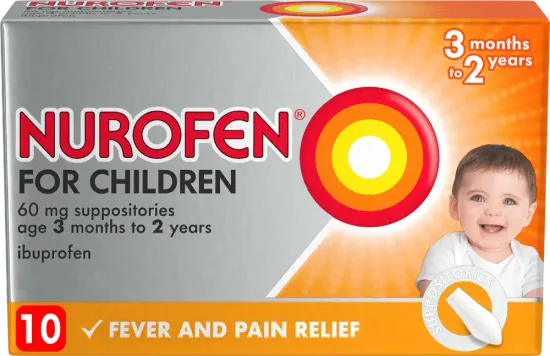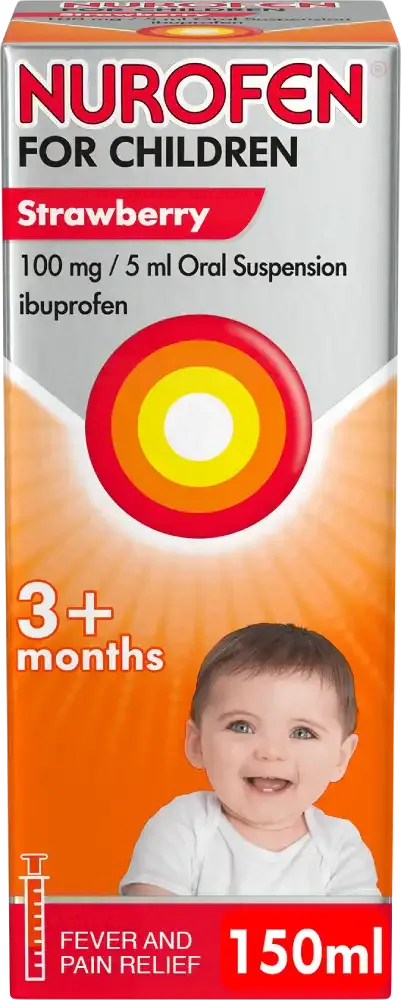
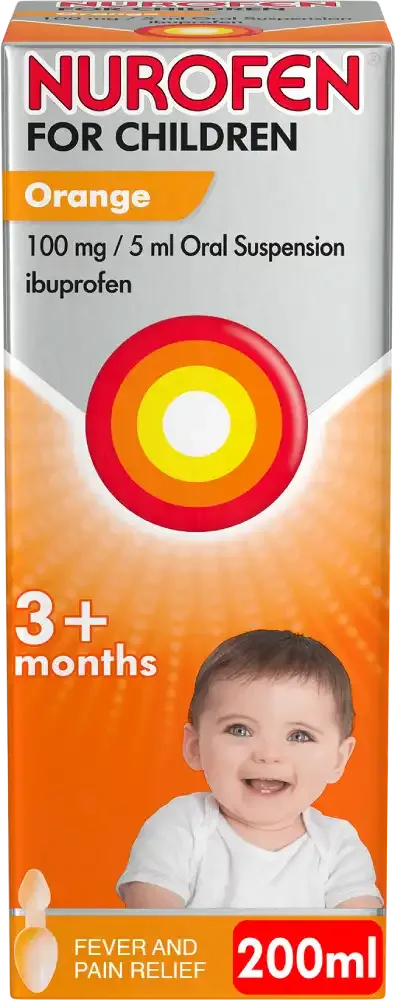
Nurofen for Children Orange 100mg/5ml Oral Suspension
Nurofen for Children provides up to 8 hours fever and pain relief
Headache Fever & pain


Teething happens when your baby’s teeth start pushing through the gums, which can leave the gums sore and painful.1
Teeth develop when the baby is in the womb and carries on after birth, in fact, some babies are born with their first teeth.2,3 There are no set rules to this. When it comes to teething, babies experience the process in different ways3 A good way to prepare for this phase in your baby’s growth is to know the signs when you see them.
The teething process:
Most children will have all 20 of their primary or “milk” teeth by around 2-and-a-half years.2 Every baby is different, but here’s the average age that different baby teeth start to appear:2
From as early as 5 years of age, your child can start to get their first permanent teeth.2 You might not notice though, as the first to appear are molars that sit behind your child’s existing back teeth.2
Different comforts help different babies. Through trial and error you can find what works for your baby. Some things to try include:
If your baby feels the need to chew something, a teething ring might be a good option. It can ease their discomfort and distract them from any pain.1 Carefully follow the instructions that come with your teething ring of choice.1 Use a big teething ring so your baby doesn’t choke and never tie one around their neck.1 Also, avoid your teething jewellery, such as necklaces or bracelets, as these can cause choking.1
If your baby is dribbling more than usual, be sure to gently wipe away the dribble to help prevent a rash.4 Your baby might also get a nappy rash too, in which case, change their nappies often and use a barrier cream to help protect their bottom1
Extra cuddles, hugs and play help to comfort and distract your baby1 You can also give cold water to help soothe their gums and healthy snacks to chew, such as apples or breadsticks, provided they are 6 months or older – and stay close by to make sure they don’t choke1
Ibuprofen can be given to young children aged 3 months and older weighing over 5kg to help relieve pain associated with teething1
Nurofen for Children contains ibuprofen, an anti-inflammatory which helps reduce the pain linked to inflammation of the gums during teething in children from 3 month of age. It relieves fever for up to 8 hours and starts to work in 15 minutes.5,6
It’s also available in either strawberry or orange flavour and is sugar-free (always important for teeth!) and colour-free.
Ask your pharmacist for advice on which Nurofen for Children product is right for your child.
This article is for general information only and not intended as a substitute for medical advice. All information presented on these web pages is not meant to diagnose or prescribe. In all health-related matters, always consult your healthcare professional.